
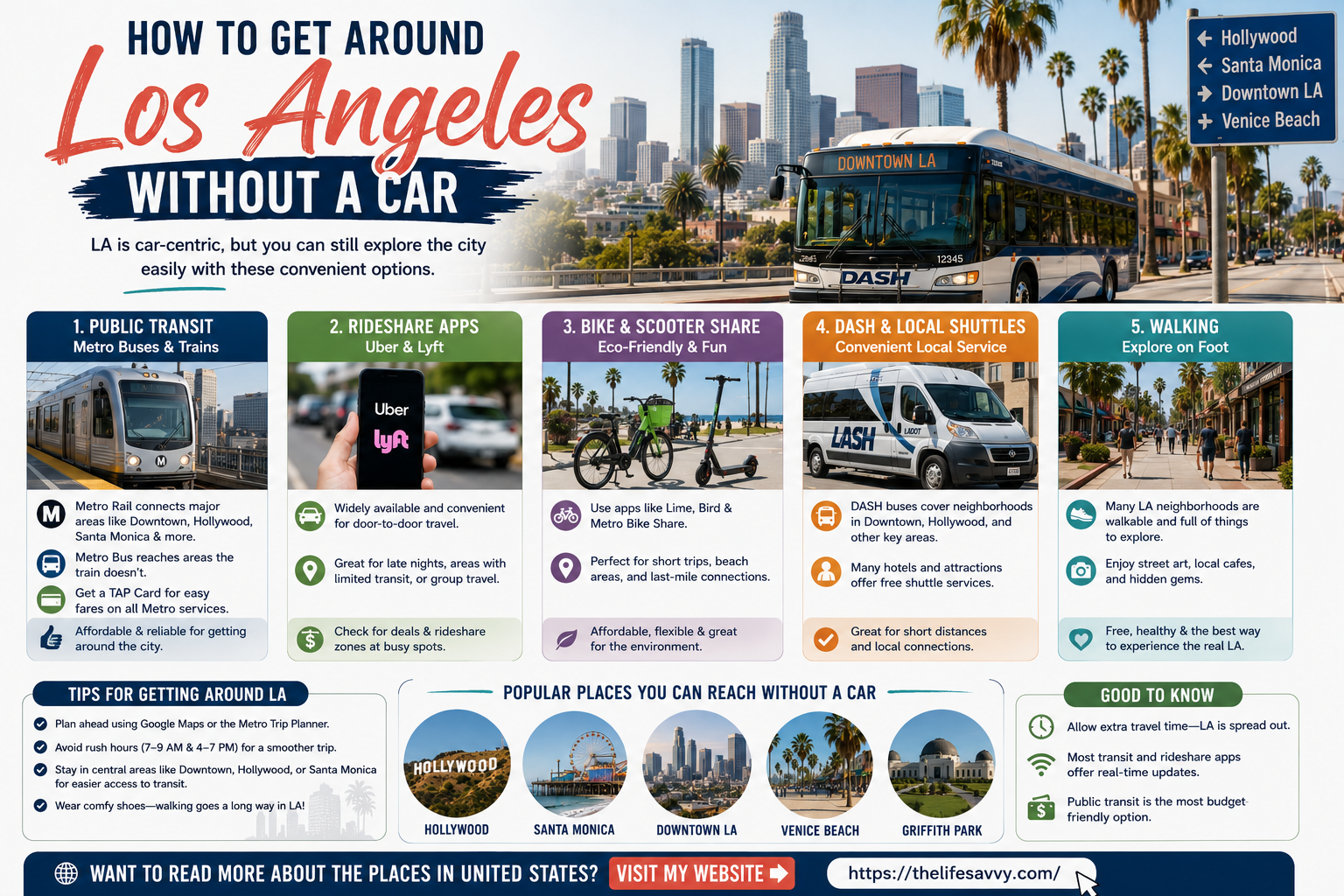

The fastest way to get around Los Angeles without a car is to combine LA Metro Rail for long distances, Metro Bus or Metro Micro for short local hops, and rideshare apps like Uber or Lyft for the gaps transit does not cover. Load a TAP card before your first ride, since it works across Metro Rail, Metro Bus, and more than 25 other regional transit agencies, and lean on walkable neighborhoods like Santa Monica, Downtown, and Pasadena to cut down on how much transit you actually need each day.
- Best for long distances: LA Metro Rail
- Best for short local hops: Metro Bus or Metro Micro
- Best for gaps transit doesn’t cover: Rideshare apps like Uber or Lyft
- Best first step: Load a TAP card before your first ride
Introduction
Los Angeles has a reputation as a city built entirely for cars, but that reputation is outdated. Metro rail lines now connect Downtown, Hollywood, Santa Monica, Pasadena, and Long Beach, and a mix of buses, bike shares, and rideshares fill in the rest. You can absolutely visit or even live in LA without ever renting a car, as long as you plan around a few key facts about how the city is laid out.
This guide covers everything you need to know about how to get around Los Angeles without a car, from loading your first TAP card to picking the right walkable neighborhood to base yourself in. If San Diego is also part of your California trip, our guide on How to Get Around San Diego Without a Car covers the same kind of planning for that city.
Start With a TAP Card
Every trip on LA public transit runs through the TAP card system. You can buy one at any Metro station kiosk, load it through the TAP mobile app, or pick one up at hundreds of retail locations around the county. Once loaded, you simply tap it at the fare gate or on the bus reader and go.
The best part of TAP is fare capping. You do not need to buy a day pass or weekly pass in advance. Just tap and ride, and the system automatically stops charging once you hit the daily cap of five dollars or the seven day cap of eighteen dollars. Base fare per ride is one dollar seventy five cents, and a single tap covers unlimited transfers for two hours.
Use the Metro Rail Network for Long Distances
Metro Rail is the backbone of car free travel in LA. Six rail lines cover a surprising amount of ground:
- B and D Lines (Red and Purple): Connect Downtown LA to Hollywood, Koreatown, and the San Fernando Valley.
- A Line: Runs from Pasadena through Downtown all the way to Long Beach.
- E Line: Links Downtown to Santa Monica, making beach trips easy without driving.
- C Line: Serves the South Bay, including near LAX.
- K Line: Connects Crenshaw, Inglewood, and the areas near SoFi Stadium.
If your itinerary sticks close to these corridors, rail alone can cover most of your trip, which is really the core idea behind getting around Los Angeles without a car in the first place.
Fill the Gaps With Metro Bus and Metro Micro
Buses reach neighborhoods rail does not, and Metro Micro offers an on demand shuttle service in select zones, including parts of the San Fernando Valley, Watts, and Compton. You request a ride through an app similar to rideshare, and a shared shuttle picks you up nearby. It is often cheaper than Uber or Lyft for short trips within its service area.
For longer local routes, Metro Local and Rapid buses run frequently along major streets like Wilshire, Sunset, and Vermont. Google Maps and the Transit app both show live bus arrival times, so you rarely have to guess when the next one shows up.
Getting To and From LAX
LAX does not have a direct rail stop yet, but the LAX Automated People Mover, called the LAX/Metro Transit Center, connects to the C Line and K Line at a station just outside the airport. A free shuttle bus links the terminals to the people mover station. This setup replaced the old shuttle bus system to the Metro line and cut travel time significantly.
If you would rather skip the transfer, rideshare pickup is available at a designated LAX-it lot, reachable by a short shuttle from any terminal. If you’re comparing airport transfer options across cities, our San Diego Airport to Downtown Transportation Guide walks through a similar decision for that city’s airport.
When to Use Rideshare or Taxis
Uber and Lyft are the practical choice for:
- Late night trips after transit service winds down
- Neighborhoods with limited bus coverage, like parts of the Hollywood Hills or Malibu
- Trips with luggage or when speed matters more than cost
- The final mile between a transit stop and your exact destination
Combining a Metro Rail trip with a short rideshare on each end is often faster and cheaper than taking a rideshare for the entire distance, especially during rush hour traffic.
Bike and Scooter Options
Metro Bike Share operates docked bike stations across Downtown, Hollywood, Pasadena, and Venice. Rides are affordable for short trips, and many docks sit right next to Metro Rail stations, making bike and rail an easy combination. Lime and Bird scooters are also widely available and useful for covering the last half mile from a station to your door.
Walkable Neighborhoods Worth Knowing
Some LA neighborhoods are genuinely walkable once you arrive, which reduces how much transit you need within a single visit. Santa Monica and Venice near the beach, Downtown LA around the Arts District, Pasadena’s Old Town, and Hollywood near the Metro station all let you park your transit pass for a few hours and explore on foot. Picking the right base matters just as much here as it does anywhere else, and if you want a side by side look at how this plays out in another California city, Best Areas to Stay in San Diego for First-Time Visitors (2026 Guide) covers the same kind of neighborhood by neighborhood breakdown, and Where to Stay in San Diego Without a Car goes even further into matching your hotel to the transit network.
Sample Car Free Day in LA
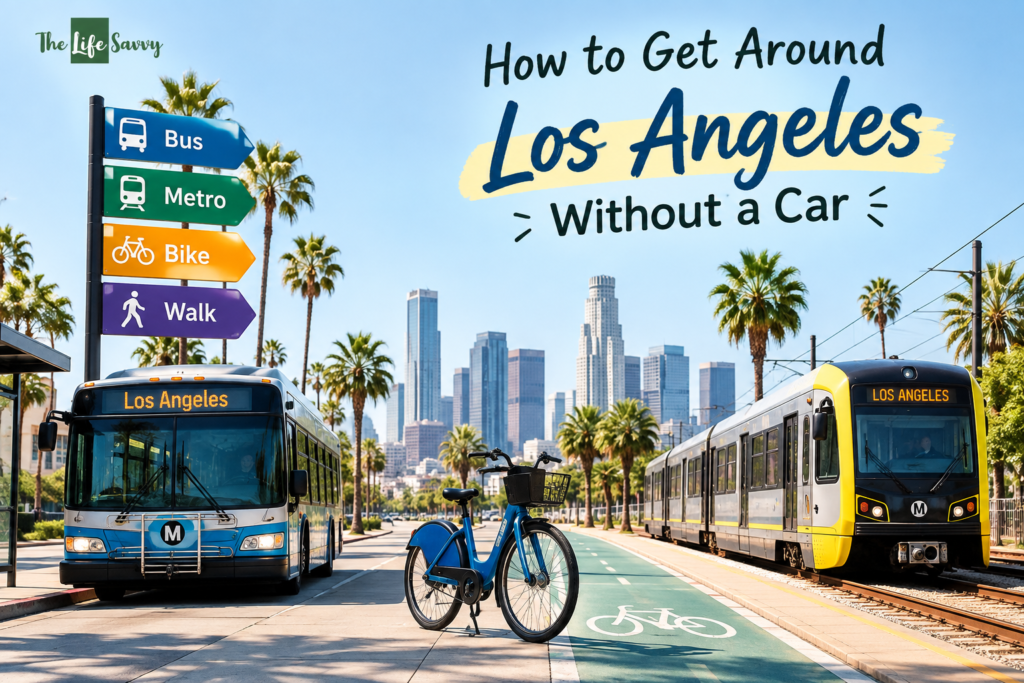
A realistic itinerary without a car might look like this: take the E Line to Santa Monica for the morning, grab a Metro Bike to ride the beach path, take a short rideshare back to the E Line station, ride to Downtown for lunch and a walk through the Arts District, then hop the B Line up to Hollywood for the evening. Total transit cost stays under the daily fare cap of five dollars, plus whatever you spend on bike share or rideshare add ons.
If you’re trying to figure out how many days to budget for a car free LA trip, or pairing it with a San Diego leg, Is 3 Days Enough for San Diego? offers a useful framework for thinking about trip length that applies just as well here.
Frequently Asked Questions
Can you get around LA without a car?
Yes, and it has gotten significantly easier over the last several years as the Metro Rail network has expanded. Metro Rail, Metro Bus, Metro Micro, bike share, and rideshare together cover nearly all of the city’s major destinations and neighborhoods, from Downtown and Hollywood to Santa Monica and Pasadena. The key to making it work is planning your itinerary around these transit corridors rather than trying to visit attractions scattered across the city on the same day. Most visitors who stay in a walkable neighborhood near a Metro Rail stop find they need a rideshare only occasionally, for late nights or spots transit doesn’t reach directly.
Is LA public transit safe?
Millions of riders use Metro Rail and buses every month, and for the vast majority of trips, the experience is no different than using public transit in any other major American city. Standard city precautions apply, like staying aware of your surroundings, keeping an eye on your belongings, and avoiding empty platforms late at night. Ridership tends to be heaviest during commute hours and around popular destinations like Downtown, Hollywood, and the beach cities, which naturally makes those rides feel busier and more routine. If you’re ever uncertain about a specific route or time of day, checking recent rider reviews or asking your hotel is a reasonable extra step.
How much does a day of LA transit cost?
Fare capping means you will never pay more than five dollars in a single day on Metro, no matter how many rides you take across Metro Rail and Metro Bus. Base fare per ride is one dollar seventy five cents, and every tap of your TAP card includes free transfers for two hours, so a single fare often covers more of your day than you’d expect. There’s also a seven day cap of eighteen dollars, which makes Metro an especially strong deal if you’re spending most of a week in the city without a rental car. Rideshare and bike share costs sit outside this cap and should be budgeted separately.
What is the best transit app for LA?
Google Maps and the Transit app both pull live Metro data and are the most reliable for real time bus and train arrivals across the city. Google Maps tends to work well as an all in one option, since it also handles walking directions and rideshare price comparisons in the same app you’re probably already using for navigation. The Transit app is worth downloading as well if you plan to rely on Metro heavily, since its interface is built specifically around public transit and tends to surface delays and service alerts a bit faster. Either one easily beats guessing bus schedules from a printed map.
Conclusion
Los Angeles is not the car dependent city it once was. With a TAP card, a transit app, and a willingness to mix rail, bus, bike share, and the occasional rideshare, you can move through the city efficiently and skip the cost and hassle of a rental car entirely. Whether this is your whole trip or one leg of a bigger California itinerary, the same planning that makes getting around Los Angeles without a car work also applies to cities like San Diego, so it’s worth reading up on both before you land.