
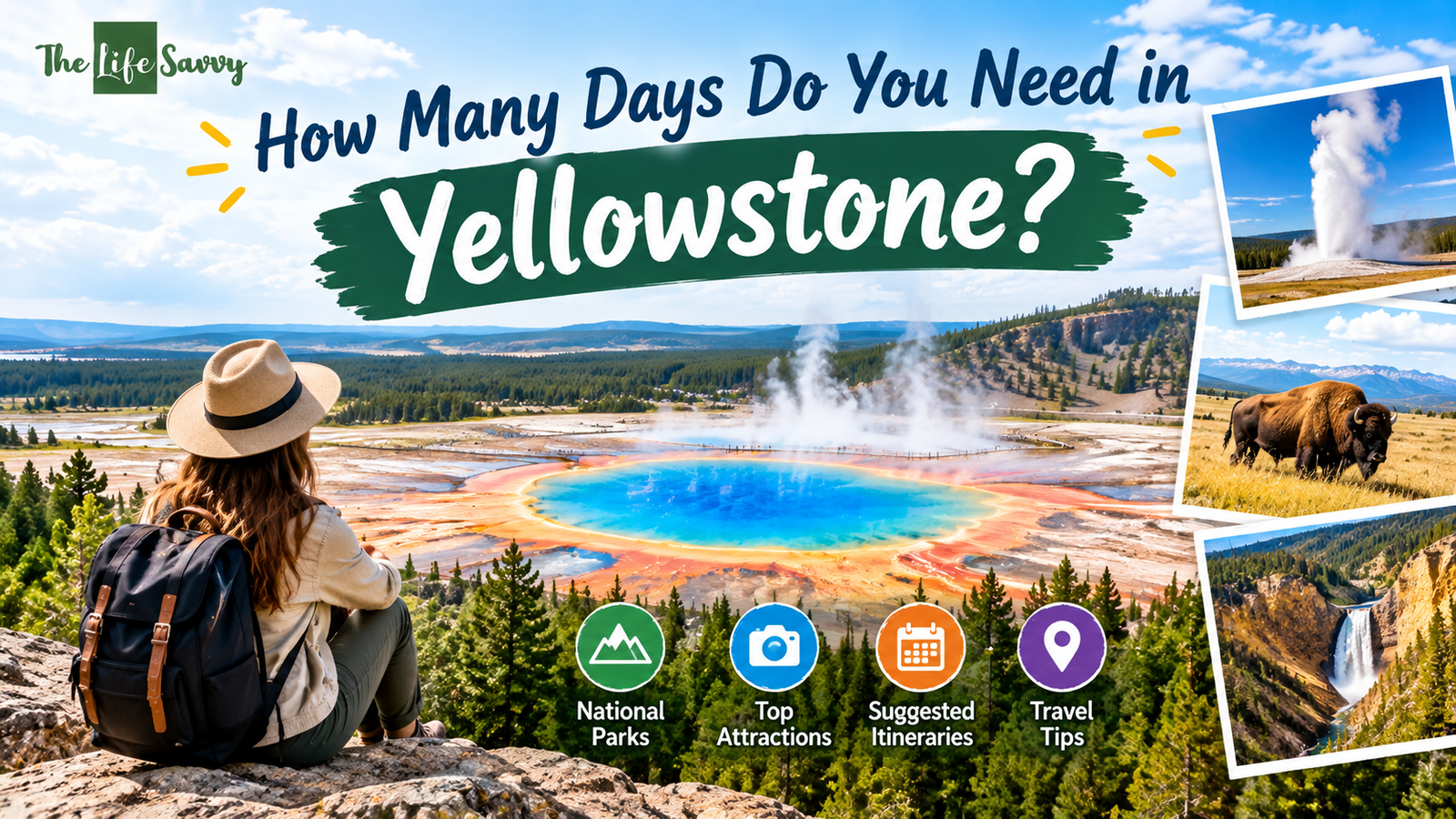

Most first-time visitors need 3 to 4 full days in Yellowstone to see the major sights without rushing. Two days covers the highlights if you are short on time, while 5 days or more lets you explore wildlife areas and hike beyond the boardwalks.
Quick points:
- 1 day: a rushed highlights drive, best only if you cannot stay longer
- 2 days: the major geysers and the Grand Canyon of the Yellowstone
- 3 to 4 days: the sweet spot for most first-time visitors
- 5 days or more: wildlife watching, hiking and the quieter corners of the park
Why This Question Is Harder Than It Looks
If you have ever tried to plan a Yellowstone trip, you have probably noticed that the park does not behave like a normal destination. It covers about 2.2 million acres, and the main roads are slow, winding and often busy with traffic that stops for a bison.
So the real answer to how many days do you need in Yellowstone is less about attractions and more about driving time. A short distance on the map can take well over an hour in the car. This guide explains how to plan your days around that reality.
Understand the Park Layout First
Most of the main sights sit along the Grand Loop Road, a figure-eight route of roughly 140 miles. The park speed limits are low, and wildlife delays are normal.
The main areas, in simple terms:
- Old Faithful and the geyser basins in the southwest
- Grand Prismatic Spring and Midway Geyser Basin just north of that
- Yellowstone Lake in the south-central area
- Hayden Valley and the Grand Canyon of the Yellowstone in the centre and east
- Mammoth Hot Springs in the north
- Lamar Valley in the northeast, famous for wildlife
Because these areas are spread out, you can spend most of a day just getting between them. That is why trying to see everything in one or two days leaves many people tired and disappointed.
1 Day in Yellowstone: Possible, but Rushed
One day works if Yellowstone is a side stop on a larger road trip. Pick one loop and accept that you will skip the rest.
A realistic plan is to enter, visit Old Faithful and the nearby geyser basin, then drive on to a canyon viewpoint if time allows. You will see the highlights, but you will spend much of the day behind the wheel.
2 Days in Yellowstone: The Highlights
Two days gives you breathing room. You can split the park into a southern day and a northern or central day.
Day 1: Old Faithful, Grand Prismatic Spring and the surrounding geyser basins.
Day 2: Hayden Valley for wildlife, then the Grand Canyon of the Yellowstone and its waterfalls.
This is a reasonable choice if you are limited by work leave or a tight itinerary.
3 to 4 Days: The Best Balance for First-Time Visitors
For most travellers, this is the answer. With three or four days you can see the main sights at a comfortable pace and still have time for a short hike or two.
A simple plan looks like this:
- Day 1: Old Faithful and the upper geyser basin, with time to explore the boardwalks
- Day 2: Grand Prismatic Spring, then Yellowstone Lake and the central region
- Day 3: Hayden Valley at dawn, then the Grand Canyon of the Yellowstone
- Day 4: Mammoth Hot Springs, then the Lamar Valley for wildlife in the evening
Early mornings and evenings are the best times for animals, so build in a couple of dawn starts if you can.
5 Days or More: For Wildlife, Hiking and Quiet
Five days or longer suits people who want more than a sightseeing loop. Extra time lets you:
- Spend an entire evening watching wildlife in Lamar Valley
- Try longer day hikes away from the main crowds
- Fish, kayak or take a boat trip on the lake
- Add a visit to nearby Grand Teton National Park, which sits just south of Yellowstone
If photography or wildlife is the main reason for your trip, plan for the longer end of the range.
What Affects How Long You Need
Several factors change the answer, so adjust the number to match your trip.
- Where you stay: Sleeping inside the park or at a gate town close to your route saves hours of daily driving.
- Time of year: Summer brings heavy traffic and long delays, while spring and autumn are calmer. In winter, most park roads close to regular vehicles, and you travel by oversnow vehicle, so plan differently.
- Travel pace: Families with young children usually need more time than a couple who are happy to drive and walk all day.
- Interests: Geyser fans, wildlife watchers and hikers all spend their time differently.
Always check the National Park Service website for current road openings, closures and construction before you travel, since conditions change.
Where to Stay to Save Time
Your base matters almost as much as your number of days. Lodging inside the park reduces driving and gives you quiet early mornings, but rooms often sell out many months ahead.
Gate towns, such as those near the west, north, south and east entrances, offer more availability and a wider range of prices. The trade-off is a daily drive in and out, which can take an hour or more before you even reach the first attraction.
Many visitors split their stay between two bases, one on the south or west side and one on the north or east side, to avoid long cross-park drives.
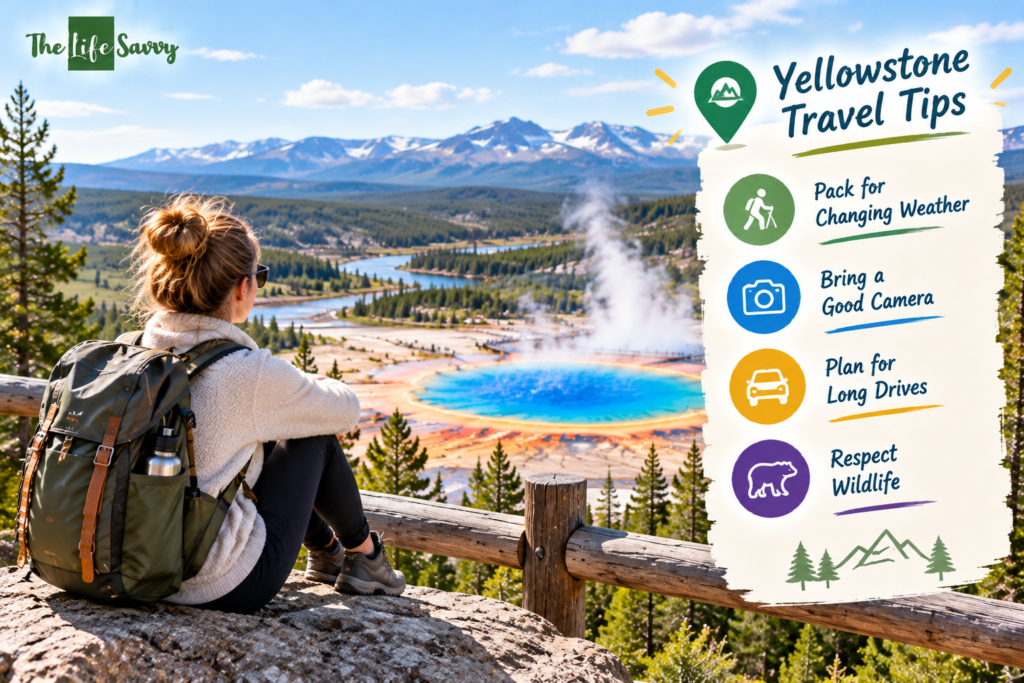
Practical Tips to Make Your Days Count
- Start early. Popular spots fill by mid-morning, especially in summer.
- Download maps offline. Mobile coverage is patchy in much of the park.
- Carry water, snacks and fuel. Services are far apart.
- Keep your distance from wildlife. Park rules require staying well back from bears, wolves and bison.
- Use the daily Old Faithful prediction. Rangers post eruption times, so you can plan around them.
- Build in a buffer day. Weather, traffic and wildlife jams can all eat into your schedule.
Conclusion
So, how many days do you need in Yellowstone? For most visitors, three to four days is the best balance of sightseeing, comfort and value. Two days works for the highlights, and five or more suits hikers and wildlife lovers.
Whichever length you choose, plan around driving time, pick a sensible base and start your days early. Do that, and Yellowstone feels like an adventure rather than a race.
Frequently Asked Questions
How many days do you need in Yellowstone for a first visit?
Three to four days is ideal for most first-time visitors. That gives you enough time to see Old Faithful, Grand Prismatic Spring, the Grand Canyon of the Yellowstone, Hayden Valley and Mammoth Hot Springs without constant rushing. Two days can cover the highlights if you are short on time, but you will spend long hours driving between areas. If you want to hike, watch wildlife at dawn and dusk, or explore quieter corners, add a day or two more.
Is one day enough to see Yellowstone?
One day is enough only for a quick taste of the park. You can usually see Old Faithful and one or two nearby geyser basins, but you will have to skip many other highlights. The roads are slow, distances are long and wildlife can cause delays, so a full loop is rarely practical in a single day. If Yellowstone is part of a bigger trip, choose one region, enjoy it properly and plan to return another time.
Is 2 days enough for Yellowstone?
Two days is workable if you plan carefully. A common approach is to spend one day on the southern geyser areas, including Old Faithful and Grand Prismatic Spring, and the second day on the canyon and Hayden Valley. You will see the best-known features, though not at a relaxed pace. Staying inside the park or very close to your route helps a lot, because it reduces daily driving time and lets you start early.
What is the best time of year to visit Yellowstone?
Late spring and early autumn are often the best, with fewer crowds and good wildlife viewing. Summer is the most popular season and offers the widest access, though roads and attractions can be very busy. Winter is quiet and beautiful, but most roads close to regular vehicles, and travel is by oversnow transport. Check the National Park Service for current road status and seasonal closures before finalising your dates, as these change each year.
Should I stay inside Yellowstone or outside the park?
Staying inside cuts your driving time and gives you quiet mornings and evenings, but rooms are limited and often book far in advance. Gate towns offer more choice and sometimes lower prices, though you will spend extra time driving each day. Many visitors combine both, choosing one base near the south or west side and another near the north or east side. The right choice depends on your budget, dates and how much driving you are comfortable with.