
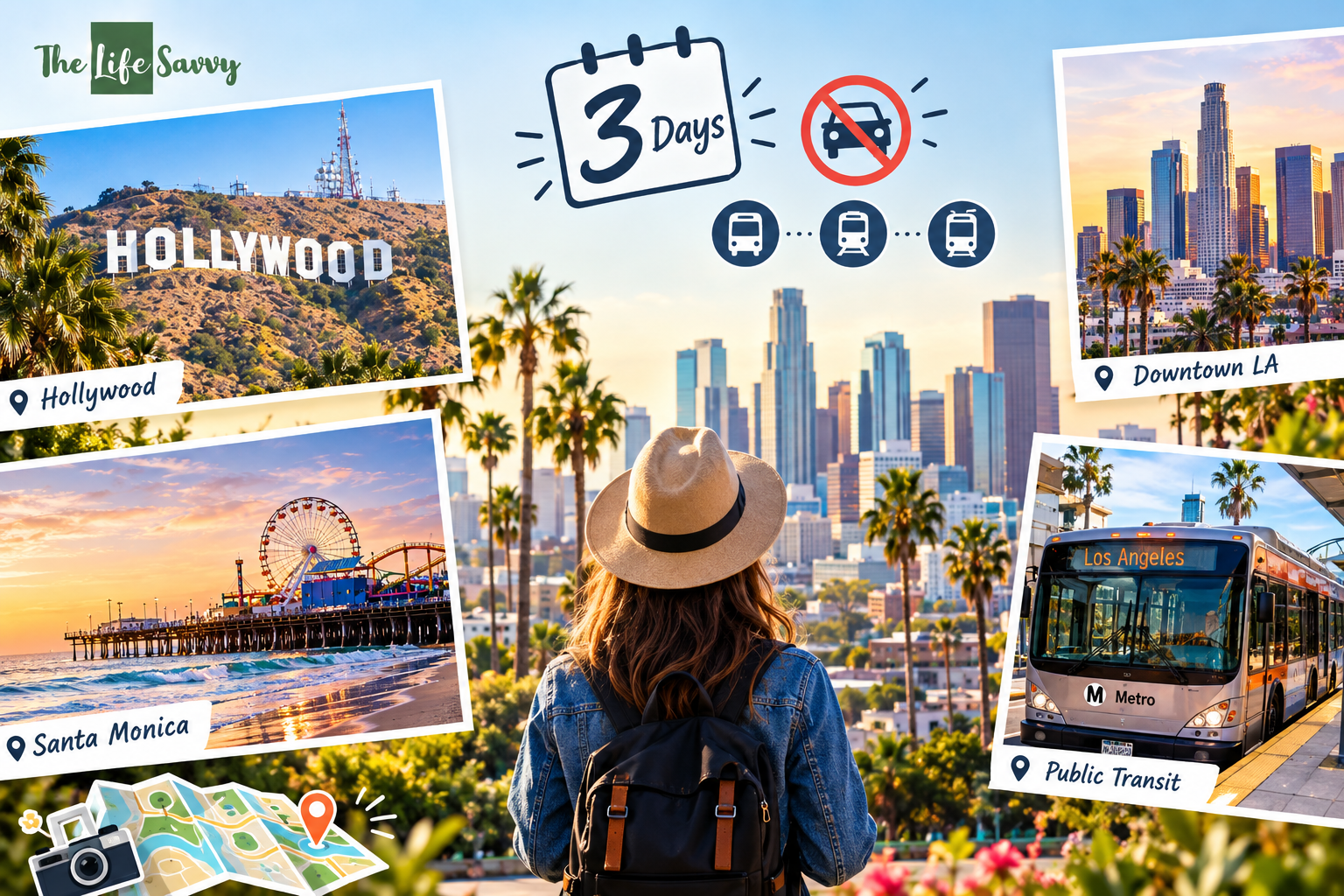

Yes, you can visit Los Angeles in 3 days without a car, as long as you plan your itinerary around Metro Rail and stick to neighborhoods that are close to a station. A realistic plan looks like one day in Hollywood, one day Downtown, and one day at the beach in Santa Monica and Venice, using Metro Rail, walking, and the occasional rideshare to connect everything. Three days is enough to cover the highlights without feeling rushed, as long as you group your sightseeing by area instead of bouncing across the city.
- Day 1: Hollywood and Griffith Observatory
- Day 2: Downtown LA and the Arts District
- Day 3: Santa Monica and Venice Beach
- Main transit tool: A TAP card for Metro Rail and Metro Bus
Introduction
LA has a reputation as a car only city, but that reputation is outdated now that six rail lines connect Downtown, Hollywood, Santa Monica, and Pasadena. If you’re wondering whether you can visit Los Angeles in 3 days without a car, the answer is a confident yes, provided you plan smartly.
The key is grouping your sightseeing by area instead of bouncing across the city each day. This guide walks through a realistic 3 day itinerary, the transit basics you need, and a few tips to keep the trip smooth from start to finish.
What Makes LA Different From Other Car Free Cities
Los Angeles is not as dense as New York or Chicago, so you cannot expect to walk between every attraction. What makes a car free trip work here is the Metro Rail system combined with smart neighborhood grouping. If you plan a day around one area, like Hollywood or Downtown, you barely need transit at all once you arrive.
The mistake most first time visitors make is trying to see attractions that are far apart on the same day, which forces long transit rides or expensive rideshares. For a deeper look at every transit option the city offers, our guide on How to Get Around Los Angeles Without a Car covers Metro Rail, buses, bike share, and more.
Do You Need a TAP Card?
Yes. Before your first ride, get a TAP card from any Metro station kiosk or the TAP app. It works across Metro Rail, Metro Bus, and most regional transit agencies. Base fare is 1.75 dollars per ride, transfers are free within two hours, and your spending caps out at 5 dollars per day no matter how many trips you take. This alone makes transit a smarter choice than rideshares for anything beyond a short hop.
A Sample 3 Day Los Angeles Itinerary Without a Car
Day 1: Hollywood and Griffith Observatory
Start your trip in Hollywood, since it’s walkable and directly connected to the B Line Metro Rail. Spend the morning walking the Walk of Fame, then head to the Dolby Theatre and TCL Chinese Theatre, both within a few blocks of each other.
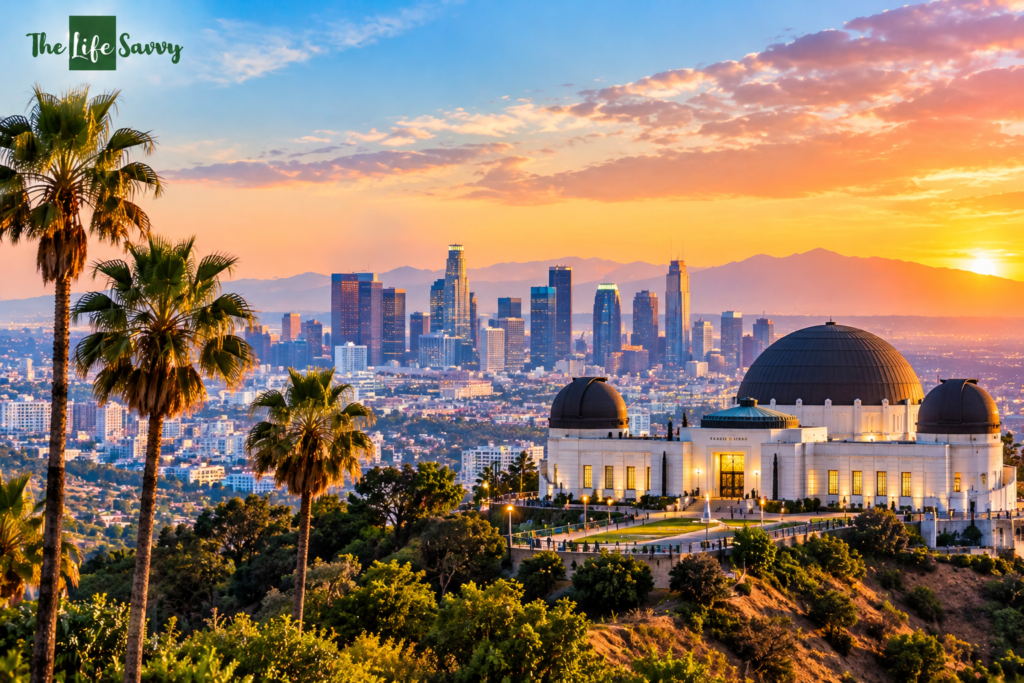
In the afternoon, take a short rideshare or bus up to Griffith Observatory. There is no direct rail line to the observatory, so this is one of the few spots where a rideshare genuinely makes sense. The views over the city and the Hollywood Sign are worth the short trip.
End the day back in Hollywood, where you’ll find plenty of restaurants and bars within walking distance of your hotel.
Getting around: B Line for arrival, walking for the main strip, rideshare or bus for Griffith Observatory.
Day 2: Downtown LA and the Arts District
Take the B Line south to Downtown LA, which sits at the intersection of four Metro Rail lines and is the most connected neighborhood in the city. Spend the morning walking through the Historic Core and stop at Grand Central Market for lunch, one of the best food halls in LA.
In the afternoon, walk over to the Arts District, where converted warehouses now hold galleries, coffee shops, and some of the city’s best restaurants. If you have extra time, Bunker Hill offers skyline views and access to The Broad museum and Walt Disney Concert Hall.
Downtown is compact enough that you can cover most of it on foot once you arrive, which makes it an easy, low stress day. If you’re still deciding which of these two neighborhoods should be your home base, Hollywood vs Downtown LA: Which One Should You Stay In? lays out the tradeoffs side by side.
Getting around: B Line to Downtown, walking for the Historic Core and Arts District.
Day 3: Santa Monica and Venice Beach
Take the E Line straight to Santa Monica, which drops you a few blocks from the Santa Monica Pier. Spend the morning on the pier and walking Third Street Promenade for shopping and breakfast.
From there, walk or bike south along the beach path to Venice, about 20 to 30 minutes on foot or 10 minutes by bike. Explore the boardwalk, Muscle Beach, and Abbot Kinney Boulevard for lunch and shopping. The Venice Canals are a quieter detour if you want a break from the crowds.
Head back to Santa Monica in the evening for dinner near the beach before your trip wraps up. If you want to dig into how the two beach towns differ before you go, Santa Monica vs Venice Beach: Which One Should You Visit? breaks it down.
Getting around: E Line to Santa Monica, walking or biking to Venice and back.
Should You Add a Fourth Neighborhood?
If you have any flexibility, Pasadena is worth considering as an add on, especially if you’re extending your trip. The A Line runs directly to Old Town Pasadena, which is walkable and home to the Rose Bowl and the Norton Simon Museum. With only 3 days, though, sticking to Hollywood, Downtown, and the beach gives you the most efficient use of your time.
What About Universal Studios?
Universal Studios Hollywood is reachable by the B Line, with a free shuttle connecting the North Hollywood station to the park entrance. If you want to include it, consider swapping it in for one of your beach or Downtown days, since a theme park usually takes a full day on its own.
Tips for a Smooth Car Free Trip
- Book a hotel within walking distance of a Metro Rail station, ideally in Hollywood or Downtown, to cut down on transit time each day.
- Download the Transit app or Google Maps before your trip for live bus and train arrivals.
- Group your sightseeing by neighborhood rather than jumping across the city, which is the single biggest time saver.
- Save rideshares for spots without direct rail access, like Griffith Observatory, rather than using them for trips transit already covers.
- Check Metro Rail hours before planning a late dinner far from your hotel, since some lines stop running earlier than you’d expect.
Choosing the right neighborhood to sleep in makes the whole trip easier, and our guide on Where to Stay in Los Angeles Without a Car covers the best areas for a car free stay.
Is 3 Days Enough Time?
Three days is enough to get a solid first impression of Los Angeles without feeling rushed, as long as you accept that you won’t see everything. You’ll get a real taste of the entertainment industry side of the city in Hollywood, the food and arts scene Downtown, and the beach culture in Santa Monica and Venice. What you’ll miss are the outer neighborhoods, like Malibu or the San Fernando Valley, which are harder to reach without a car and better suited to a longer trip or a rental car day.
Continuing Your California Trip
If Los Angeles is just one stop on a bigger West Coast trip, the same car free approach works well in San Diego too. Our San Diego Airport to Downtown Transportation Guide shows how easy that first leg can be once you land.
Frequently Asked Questions
Can you visit Los Angeles in 3 days without a car?
Yes, you can visit Los Angeles in 3 days without a car, and many travelers find it easier than expected. The Metro Rail network connects Downtown, Hollywood, Santa Monica, and Pasadena, so you can reach most major sights by train, then explore each neighborhood on foot. The trick is to group your sightseeing by area, spending one day in Hollywood, one Downtown, and one at the beach. Rideshares fill the few gaps, such as Griffith Observatory, and a TAP card keeps your daily transit spending capped at 5 dollars, which makes the whole trip affordable.
What is the best area to stay for 3 days in LA without a car?
Downtown LA and Hollywood are the best areas to stay for 3 days in Los Angeles without a car. Downtown sits at the intersection of four Metro Rail lines, which makes it the most connected neighborhood in the city and a flexible base for day trips. Hollywood works well if you want classic sights and nightlife within walking distance of the B Line. Santa Monica is a strong choice if the beach is your priority. Whichever you pick, choose a hotel within a short walk of a Metro station to cut down on transit time each day.
How much does public transit cost for 3 days in LA?
Public transit for 3 days in Los Angeles costs very little, thanks to fare capping on the TAP card. A single ride is 1.75 dollars, and transfers within two hours are free. Your spending automatically caps at 5 dollars per day no matter how many rides you take, so three full days of Metro Rail and bus travel will cost 15 dollars at most. Rideshares for spots like Griffith Observatory will add to the total, but even with a few of those, a car free trip is usually far cheaper than renting a car and paying for parking.
Is Los Angeles walkable without a car?
Los Angeles is not walkable as a whole, but many of its neighborhoods are very walkable once you arrive. Hollywood’s main strip, Downtown’s Historic Core and Arts District, Old Town Pasadena, and the Santa Monica and Venice beachfront all let you explore on foot for hours. The city is simply spread out, so you will rely on Metro Rail, buses, or the occasional rideshare to move between these pockets. Planning each day around one or two connected areas keeps walking enjoyable and avoids long, frustrating transit rides between distant parts of the city.
Can you get to Universal Studios without a car?
Yes, you can get to Universal Studios Hollywood without a car. Take the B Line Metro Rail to the Universal City station, where a short walk or free shuttle connects you to the park entrance. The ride from Hollywood takes only a few minutes, which makes it one of the easiest theme park trips to pull off by transit anywhere in the country. Because a visit usually takes most of the day, it works best as a swap for one of your Downtown or beach days rather than something squeezed into an already full itinerary.
Final Thoughts
You do not need a car to have a great 3 day trip to Los Angeles. The city’s Metro Rail system, combined with walkable pockets in Hollywood, Downtown, and the beach neighborhoods, covers more ground than most visitors expect. Plan your days by neighborhood instead of by attraction, lean on rail for the longer trips, and save rideshares for the few spots transit doesn’t reach. Do that, and you can visit Los Angeles in 3 days without a car and still see the best of what the city has to offer.