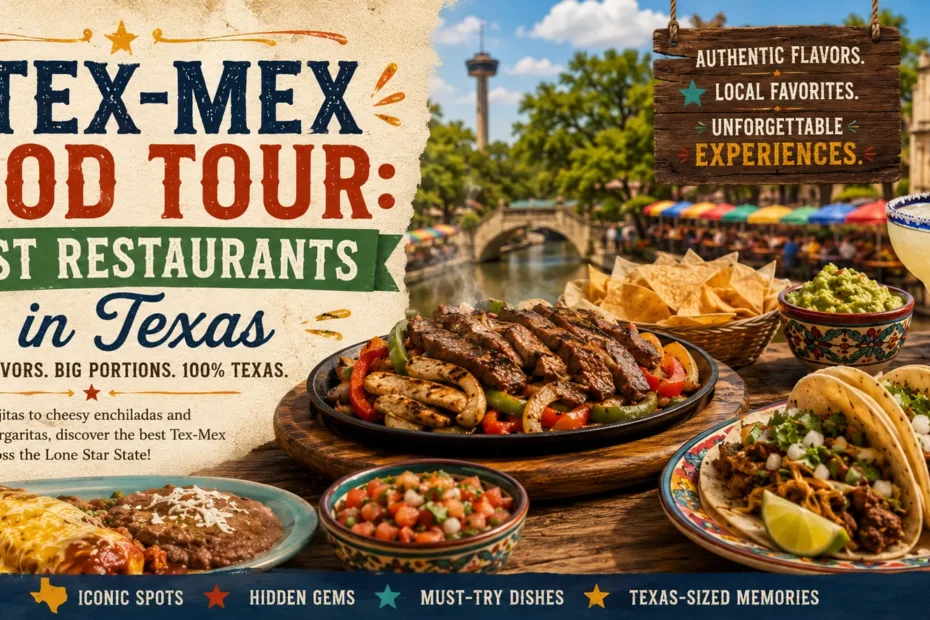
No cuisine defines Texas quite like Tex-Mex, and no road trip through the state feels complete without working through a list of the best Tex-Mex restaurants Texas. This is food with deep roots and strong opinions attached to it — every city has its own institutions, its own decades-old family-run spots, and its own fierce local loyalty to one enchilada plate over another. Here’s where to find the best of it, city by city.
What Is Tex-Mex Food, Exactly?
Tex-Mex grew out of the borderlands, where Mexican cooking traditions met American ingredients and techniques — yellow cheese, beef, and flour tortillas folded into recipes that originated south of the border. It’s a distinct cuisine in its own right, not simply “Mexican food,” and it carries its own canon of dishes: cheese enchiladas, beef fajitas, chili con queso, and the combination platter that’s become a Tex-Mex restaurant standard nationwide.
San Antonio is generally considered the cultural home of Tex-Mex, tracing back to the city’s historic open-air “chili queens” who sold spiced stews in the plazas generations ago. But the cuisine has strong, distinct identities in Austin, Houston, and Dallas too, each shaped by the specific communities that built their local food scenes.
Best Tex-Mex in San Antonio
San Antonio’s deep Hispanic heritage makes it arguably the strongest Tex-Mex city in the state, with family-run institutions that have outlasted generations of newer competition.
- Mi Tierra Café y Panadería: Open around the clock in Historic Market Square since 1941, Mi Tierra is as much an experience as a restaurant — colorful murals, live mariachi music, and an attached bakery selling fresh pan dulce. It’s fed multiple generations of San Antonio families and remains one of the most recognizable Tex-Mex destinations in the entire state.
- Rosario’s: A Southtown staple known for bold, generous Tex-Mex plates and a genuinely lively dining room. Its fish taco has been recognized by Texas Monthly as one of the state’s essential tacos, and the restaurant has also picked up local awards for its salsa and margaritas.
- Garcia’s Mexican Food: A family-run spot on Fredericksburg Road serving San Antonio since 1962, still run today by the original owners’ children. The brisket taco is the dish locals point to first.
- Acenar: A more modern, upscale take on Texas regional Mexican cuisine near the River Walk, featuring Gulf seafood and tableside guacamole alongside classic Tex-Mex staples.
Best Tex-Mex in Austin
Austin’s Tex-Mex scene leans a little more varied — long-running institutions sit alongside the city’s broader, newer food trends.
- Matt’s El Rancho: An Austin fixture since 1952, best known for the Bob Armstrong Dip — a layered combination of guacamole, seasoned beef, and melted cheese that’s become something of a Texas food landmark in its own right.
- Juan in a Million: The definitive Austin breakfast taco stop, a simple, no-frills counter that’s become a cult favorite well beyond the city limits.
- Torchy’s Tacos: Started as an Austin food trailer and grew into a regional chain, known for a more inventive, gourmet approach to the taco than traditional Tex-Mex counters.
Best Tex-Mex in Houston and Dallas
- Lupe Tortilla (Houston): Founded in 1983 out of a converted 1940s house, Lupe Tortilla built its reputation on lime-pepper marinated fajitas and scratch-made recipes, and has since grown into one of the most recognized Tex-Mex names in the Houston area.
- El Fenix (Dallas): Founded in 1918, El Fenix holds a claim as one of the oldest continuously operating Tex-Mex restaurants in the entire state, predating much of what’s now considered the genre’s classic style.
- Houston’s broader Tex-Mex scene: Houston’s diversity adds extra range to its Tex-Mex offerings, often blending in influences from the city’s large immigrant communities alongside the more traditional combination-plate classics.
Must-Try Tex-Mex Dishes
If you’re building an actual food tour around this list, a few dishes are worth specifically seeking out:
- Cheese enchiladas: A Tex-Mex staple, and the dish most locals use to judge whether a restaurant is doing things right.
- The Bob Armstrong Dip: Specific to Matt’s El Rancho in Austin, but worth tracking down at least once for the history alone.
- Breakfast tacos: A morning institution across the state, especially in Austin and San Antonio, where they show up everywhere from gas stations to sit-down restaurants.
- Fajitas: Sizzling, tableside, and a genuine Tex-Mex invention rather than a dish imported from Mexico.
- Puffy tacos: A San Antonio specialty — a fried, puffed tortilla shell that’s become its own distinct regional specialty within Tex-Mex.
- Chili con queso: Simple, cheese-based, and one of the most exported Tex-Mex dishes nationwide, though the best versions are still found in Texas.
FAQs About Tex-Mex Cuisine
What city has the best Tex-Mex in Texas? San Antonio is widely considered the cultural home of Tex-Mex, with deep historic roots and some of the state’s oldest continuously running restaurants, though Austin, Houston, and Dallas all have their own strong, distinct Tex-Mex scenes.
Is Tex-Mex the same as Mexican food? No — Tex-Mex is a distinct regional cuisine that developed where Mexican cooking traditions met American ingredients along the Texas border, resulting in dishes like cheese enchiladas and fajitas that aren’t traditional in Mexican cooking itself.
What’s the most iconic Tex-Mex dish to try in Texas? Cheese enchiladas and fajitas are the two most universally recognized Tex-Mex dishes, but regional specialties like San Antonio’s puffy tacos and Austin’s breakfast tacos are worth seeking out for a more complete picture of the cuisine.
What’s the oldest Tex-Mex restaurant in Texas? El Fenix in Dallas, founded in 1918, is among the oldest continuously operating Tex-Mex restaurants in the state, with Mi Tierra in San Antonio (open since 1941) close behind.
Final Thoughts
A real Tex-Mex food tour means treating each city as its own chapter rather than expecting the same menu everywhere — San Antonio’s historic institutions, Austin’s breakfast taco culture, and Houston and Dallas’s own long-running classics all bring something different to the table. Build a route around even three or four of these stops, and you’ll come away with a far better understanding of Tex-Mex than any single restaurant could give you.